
Community-managed TNR programs are quietly doing what a decade of killing couldn’t
By Angela Fisher | The Open Record
BLUF: A ten-year government campaign to kill two million cats in Australia left the feral cat population statistically unchanged, confirmed the ecological principle that removing predators creates vacuums other predators rush to fill, and coincided with catastrophic mouse plagues that cost farmers an estimated $1 billion. Meanwhile, a 28-year university study in Florida, Japan’s nationally coordinated community cat program, and Germany’s mandatory neutering ordinances all point toward the same conclusion: the science on what actually works is not in dispute. The argument is about politics, not evidence and in communities across the country, people have stopped waiting for the argument to resolve. Some figures show a wide variance in this article. There is an explainer at the bottom that addresses that.
The Approach That Failed at Continental Scale
In 2015, the Australian government announced a plan to kill two million feral cats by 2020, using shooting, poisoning, and toxic grooming traps. The stated rationale was conservation: feral cats had been linked to the extinction of at least 27 native mammal species, and the biodiversity toll was real. The logic seemed straightforward. Remove the predator. Protect the prey.
It didn’t work.
A decade later, Australia’s feral cat population stands at an estimated 1.4 to 5.6 million in the bush, plus an additional 700,000 in urban areas virtually identical to pre-cull figures. The continental population did not decline. What did happen, beginning in 2020 and peaking in 2021, was a catastrophic mouse plague across Australia’s east coast that caused an estimated $1 billion in damage. Mice ate seeds as they were planted, destroyed wiring in farm equipment, contaminated livestock feed. Farmers reported catching 500 to 600 mice per night in home traps.
The scientific community debated causation carefully — climate conditions and grain harvests are the primary drivers of mouse plague cycles — but researchers openly acknowledged that removing a continent’s apex small-predator population from ecosystems across the same regions doesn’t help. One scientist noted that intensive cat extermination campaigns had been carried out across many of the exact areas now overrun with mice, invoking the Latin adage that has been true for a thousand years: dum felis dormit, mus gaudet. When the cat sleeps, the mouse rejoices.
The deeper scientific problem had been identified years earlier. A 2015 study by Tasmanian Department of Primary Industries biologist Billie Lazenby and colleagues, published in Wildlife Research, set out to validate lethal culling. It found the opposite. Culling over 13 months in open sites across southern Tasmania caused the relative abundance of feral cats in culled areas to increase by 75% to 211% as dominant resident cats were removed and new individuals flooded in from surrounding territory.
“In the areas that I had tried to reduce cat numbers,” Lazenby said, “I recorded an increase in cat numbers — I actually had more cats running around on those sites than beforehand.”
This is called the vacuum effect. It was first identified by British biologist Roger Tabor in 1983. When cats are removed from a territory, the vacancy advertises itself. New cats arrive. Reproductive rates among survivors climb. Within one to two breeding cycles, the population is back. The only studies that showed lethal culling working were conducted on islands. Bounded, closed systems. Australia is not an island in any relevant ecological sense. As soon as one cat is removed from an open landscape, another takes its place from a self-replenishing population that extends to the horizon.
By 2024, Australian policy had effectively conceded the point. The national Threat Abatement Plan quietly shifted its frame from continental population reduction to protecting specific zones. Fenced exclosures (physical barriers inside which feral predators are absent) began producing the conservation wins the cull never delivered. The new honest statement of the problem, from experts: eradicating feral cats across the Australian mainland is considered impossible.
A decade. Millions of cats killed. Population unchanged.
What the Science Actually Shows
The evidence base for what works has been accumulating for thirty years, across multiple countries, independent research institutions, and methodologies. It converges on the same set of conclusions.
The 28-Year Standard
The most rigorous long-term TNR data in existence comes from the University of Central Florida campus, where a volunteer-run program has been operating continuously since 1991. A peer-reviewed analysis published in the journal Animals examined outcomes across the full 28-year period through 2019.
From 1991 to 2019, 204 cats were enrolled. The community cat population declined by 85%. Eleven of 16 total colonies were completely eliminated. The last kitten known to have been born on campus was in 1995. Four years after the program began. All subsequent kittens enrolled were immigrants, trapped and either adopted or sterilized.
The initial 66% reduction observed in the first eleven years continued. In the seventeen-year follow-up period, the population declined a further 57%. This occurred despite significant growth in UCF’s student enrollment over the same period, meaning more people, more food sources, and more potential for abandonment. And the program still held.
The key variables the study identified: sterilization rate must be high and sustained; new arrivals must be trapped and processed promptly; adoptions must be coordinated alongside sterilization. The UCF program was not simply a spay-neuter operation. It was a managed system with continuous active intervention. When those conditions are met, the results are durable across decades.
The Mortality Math
A simulation study published in Frontiers in Veterinary Science by the Alliance for Contraception in Cats & Dogs modeled seven management scenarios over a ten-year period for a population of 50 cats. The cumulative preventable deaths (kittens dying before adulthood plus adults lethally removed) were highest under no-action (estimated 1,000 deaths) and lowest under high-intensity TNR (estimated 32 deaths). A 31-fold difference in preventable mortality between the worst response and the best.
High-intensity trap-and-kill produced results that were neither humane nor effective: populations rebounded through the vacuum effect, generating continuous cycles of killing without achieving the population reduction that justified them. The models showed TNR only fails (as critics correctly note) when sterilization rates are insufficient, when the colony is too large relative to volunteer capacity, or when abandonment rates are high enough to continuously replenish the population. These are resource and management failures, not evidence of TNR’s inefficacy as a method.
The Threshold
Computer modeling across multiple studies identifies the minimum sterilization threshold required to produce population decline: approximately 30% of the unsterilized population treated every six months, sustained over time. Below that threshold, the population stabilizes but doesn’t decline. Above it, decline is consistent and measurable.
The Cost Case
A 10-year study in Orange County, Florida compared the actual cost of a feral cat sterilization program — 7,903 cats neutered — against the modeled cost of impounding and euthanizing the same population. Sterilization: $442,568. Impoundment and euthanasia: $1,098,517. The lethal approach cost 2.5 times more and, unlike sterilization, required continuous repetition as populations rebounded.
Japan and Germany: Two Different Institutional Responses
The United States is not the only country working through this question, and examining how other nations have structured their approaches illuminates both what’s possible and what the obstacles are.
Japan’s Chiiki-Neko Model
Japan has developed the most culturally integrated community cat management system in the world. The concept of the chiiki-neko (community cat) embeds TNR directly into neighborhood infrastructure. Cats without specific owners are collectively recognized and cared for by local residents, sterilized (marked with a V-shaped ear cut that earns them the name “sakura cats” (cherry blossom cats)), and managed within a defined community territory for their entire lives.
Japan’s Ministry of the Environment officially recommends that local residents manage unowned cats through neutering and return or adoption, with the stated long-term objective of eliminating the unowned cat population entirely through attrition rather than killing. Some Tokyo wards cover the full cost of spaying and neutering. The program operates on the understanding that a sterilized, territory-holding cat population is stable and its own best defense against new arrivals. The same principle the vacuum effect demonstrates from the other direction.
The program has real limitations. It depends heavily on community volunteers, many of whom are aging; Japan’s declining rural population creates vacant properties that serve as new breeding sites; and enforcement is inconsistent. But as a model of institutional integration — government policy, local community responsibility, and veterinary infrastructure aligned around the same goal — it represents a maturity of approach the US has not yet achieved at national scale.
Germany’s Mandatory Neutering Experiment
Germany has taken a structurally different approach, attacking the problem at its source rather than managing it downstream. The German Animal Welfare Federation frames the issue precisely: every feral cat is ultimately descended from a domestic cat whose reproduction was not controlled. The feral population is not a wild problem. It is a human behavior problem with a wildlife consequence.
In response, municipalities and states have been enacting mandatory neutering ordinances for free-roaming cats. Bonn has had compulsory neutering, identification, and registration of outdoor cats since 2012. Berlin enacted a city-wide ordinance in 2022 requiring all cats to be neutered, microchipped, and registered if they roam free after five months of age. Hamburg followed in January 2026. Dozens of additional municipalities have adopted similar measures.
The German public is strongly supportive. A 2026 Animal Welfare Barometer survey found that 71.3% of Germans support a nationwide neutering requirement for outdoor cats.
And yet Germany’s feral cat crisis is worsening. As of late 2024, 71% of German animal welfare organizations reported increasing street cat populations. Up from 53% just two years earlier. Animal shelters are overwhelmed. The gap between where mandatory ordinances exist and where they don’t creates exactly the patchwork problem: cats cross jurisdictional lines. A mandatory neutering law in Bonn does not stop an unneutered cat from a neighboring municipality from wandering in, establishing territory, and reproducing.
Germany’s lesson is important and underappreciated: even the correct diagnosis, that the source of feral cat populations is irresponsible ownership, produces incomplete results when implemented inconsistently and without adequate funding. The country that most clearly identified the root cause is still struggling with the symptom because its institutions haven’t caught up to its own analysis.
The German situation also points toward something the Australian data confirms from a different angle: the feral cat problem is not a cat problem. It is a human behavior problem. Cats do not choose to be abandoned on rural roads. They do not choose to roam into ecosystems where their kittens will become feral. Every cat in a feral colony traces its lineage to a human decision to not neuter, to abandon, to dump.
A Private Road in Northern Michigan
The colony on my road exists because people dump cats here.
This is worth stating plainly, because most coverage of feral cat management focuses on colony management and pays insufficient attention to the source variable. You can run the most effective TNR program in the world and still face a growing colony if the human behavior creating the colony goes unaddressed. The Miami-Dade study that critics often cite as evidence against TNR found exactly this: colonies in two public parks increased despite high sterilization rates because of continuous illegal dumping of new cats. The program wasn’t failing. The abandonment rate was overwhelming it.
My road is private, rural, and sits in a part of northern Michigan where a small number of people hold the view that any cat without an obvious owner is a legitimate target. This is not a rural phenomenon. Twenty years in metro-Detroit taught me the same voices exist everywhere, in different settings, at the same volume. Under Michigan Compiled Laws 750.50b, cats are explicitly defined as companion animals, and knowingly killing one without just cause is a criminal offense carrying fines and potential jail time.
It is also, as the science now documents in considerable detail, ecologically counterproductive. Shooting cats creates vacuums. Vacuums fill. The colony continues.
This month, with the help of Northeast Michigan TNR, we did something different.
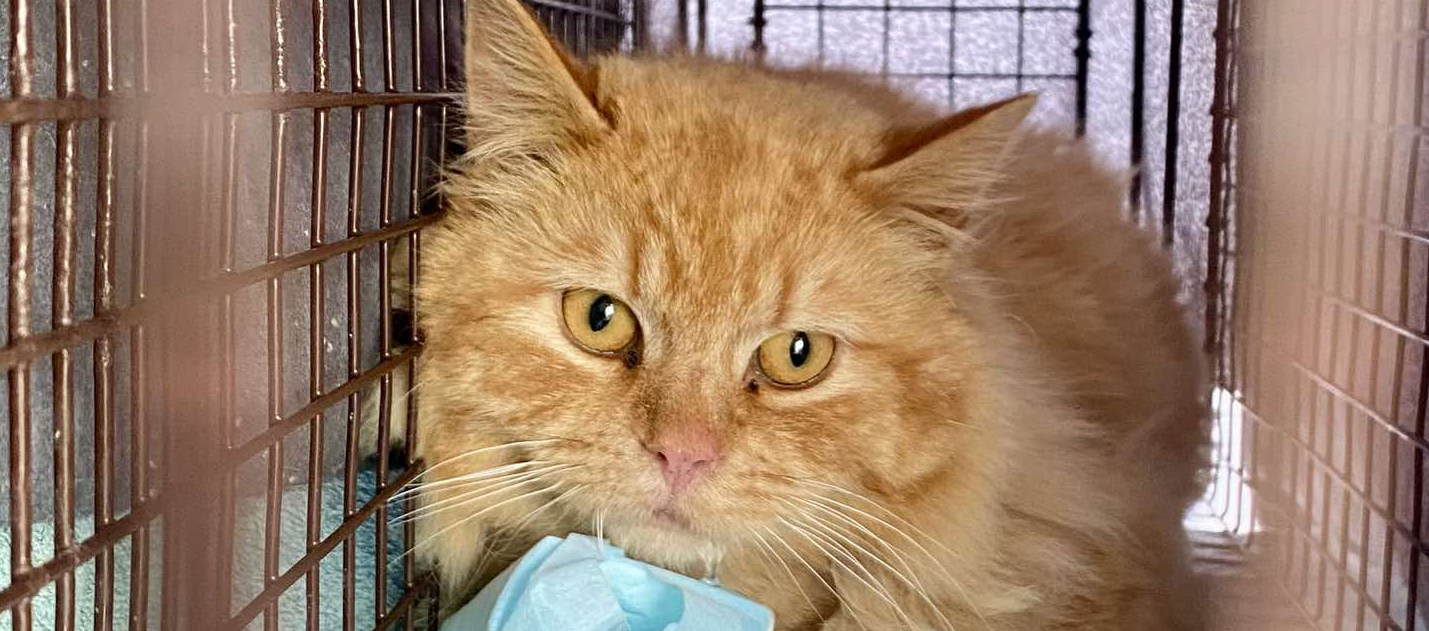
I connected with Northeast Michigan TNR after recognizing that the colony had grown beyond what informal, neighbor-by-neighbor management could address. They handled the operational infrastructure: trapping, veterinary scheduling, and transport. My role was colony-side caring for cats held in cages between trapping and transport, managing feeding and pee pad rotations, and working with the neighbors who do the daily feeding to keep the community side of the operation coordinated and as informed as possible. That division of labor matters, because it reflects how successful TNR programs actually function: not as a single person heroically managing a colony, but as a network with defined roles.
When the first round was done, the numbers looked like this: 30 adults desexed. Two placed into working cat programs. Nine kittens in foster care, all far too young for surgery, all on the adoption pipeline. Northeast Michigan TNR also coordinated a mobile veterinarian who processed 15 cats in a single day. Every cat that went through the program received a rabies vaccination, wormer (though not all ate). Random combo testing was completed as well for even greater community assurance.
The colony on my road sits at roughly 40-50 cats now. The broader subdivision has an estimated 100 more. We have work left to do.
What we have is not a finished result. It’s a first round, and the process is ongoing in exactly the way the UCF program was ongoing: prompt processing of new arrivals, continued monitoring, adoptions coordinated alongside sterilization. The mobile vet model matters because it demonstrates the scalability that makes high-intensity programs possible without requiring every caretaker to individually transport cats to clinics and organizations like Northeast Michigan TNR make that model accessible to communities that would otherwise lack the infrastructure to attempt it at all.
A small number in local communities want to shoot them. They’re vocal about it. We’ve largely stopped engaging with that argument, because the argument isn’t the point. The cats are the point. And the cats are getting fixed.
The majority here – people doing the work, trapping, networking, transporting to and from surgeries, who made calls and showed up – are not making policy arguments. They’re doing the work. That’s how every successful TNR program in the literature got built: not by winning debates, but by accumulating results.
The Legal and Legislative Landscape in Michigan
Michigan’s legal landscape shifted in 2024. House Bill 4596, sponsored by Rep. Laurie Pohutsky, passed the legislature and was signed into law as Public Act 43 of 2024. The law formally defines community cats, caregivers, and colonies in Michigan statute; clarifies that returning a cat during TNR is not abandonment; protects caregivers from being classified as legal owners; and exempts community cats from feeding bans and stray hold periods that previously created bureaucratic obstacles to TNR programs. It is, in short, the institutional framework that Japan built through cultural practice and Germany is still trying to construct through patchwork municipal ordinances. And Michigan enacted it in a single legislative session.
The animal cruelty statute remains the floor. Under MCL 750.50b, cats are explicitly companion animals and killing one without just cause is a criminal offense carrying fines and potential jail time. Public Act 43 of 2024 builds the ceiling: a legal architecture that makes the humane approach not just permissible but actively supported.
Michigan is now, on paper, ahead of most of the country. The question is whether communities and the organizations like Northeast Michigan TNR that do the actual work have the resources to use what the law now allows.
The Structural Argument
The through-line across Australia, Japan, Germany, the United States, and a private road in northern Michigan is the same. The feral cat population is not a natural phenomenon. It is the accumulated consequence of human decisions: to not neuter, to abandon, to dump, to kill in ways that make the problem worse rather than better.
The vacuum effect is not a theory. It has been measured in Tasmania, documented in Florida, demonstrated in Newburyport, Massachusetts, where a trap-and-kill program removed 30 cats from a colony and watched 30 new cats fill the space within two years. It is the reason Australia spent a decade and considerable national resources killing cats and ended up with the same number of cats plus a billion-dollar mouse plague.
The evidence for what works is not similarly contested. High-intensity TNR, sustained over time, paired with active adoption programs, reduces colony populations. The UCF program ran for 28 years and achieved 85% colony reduction. Japan’s community cat model is producing durable results in dense urban environments. Germany’s mandatory neutering approach correctly identifies the source of the problem, even as its patchwork implementation demonstrates that correct diagnosis without adequate institutional follow-through is insufficient.
None of this requires coordination, malice, or policy breakthrough to act on. It requires traps, vets, volunteers, and time. Communities that have simply gotten on with it are accumulating the results that the argument about what to do continues, elsewhere, to forestall.
While that argument continues, the cats are getting fixed.
Angela Fisher is editor and founder of The Open Record. She coordinated the community TNR effort described in this article in partnership with Northeast Michigan TNR. Research for this piece was conducted in collaboration with Claude (Anthropic). For full methodology and source documentation, including the AI collaboration disclosure, see the linked Sources document.
DATA SIDEBAR: Key Statistics
| Metric | Figure | Source |
|---|---|---|
| UCF campus colony reduction (28 years) | 85% | Animals journal, 2019 |
| UCF colonies fully eliminated | 11 of 16 | Animals journal, 2019 |
| Last kitten born on UCF campus | 1995 (4 years post-program) | Levy et al. |
| Preventable deaths: high-intensity TNR vs. no action (10 yr, 50 cats) | 32 vs. 1,000 (31x difference) | ACC&D / Frontiers in Vet Science |
| TNR vs. trap-kill cost (Orange County FL, 7,903 cats) | $442K vs. $1.09M | Orange County study |
| Minimum sterilization threshold for population decline | 30% of unsterilized population / 6 months | Modeling consensus |
| Australia feral cat population: pre-cull estimate | 2–6 million | CSIRO |
| Australia feral cat population: current estimate | 1.4–5.6 million (seasonal range) | Australian Threat Abatement Plan 2024 |
| Australia 2020–2021 mouse plague damage | ~$1 billion | Australian agricultural estimates |
| Tasmania cull study: cat population increase in culled sites | 75%–211% | Lazenby et al., Wildlife Research, 2015 |
| Germany: animal welfare orgs reporting rising street cat populations (2024) | 71% | German Animal Welfare Federation |
| Germany: public support for nationwide neutering mandate (2026) | 71.3% | Animal Welfare Barometer 2026 |
| US cities/counties with official TNR policies (as of 2014) | 430+ | Alley Cat Allies |
| Author’s colony — adults desexed, Round 1 | 30 | Program records |
| Author’s colony — working cat placements | 2 | Program records |
| Author’s colony — kittens in adoption pipeline | 9 | Program records |
| Author’s colony — mobile vet single-day capacity | 15 | Program records |
DATA NOTES: On Variance, Methodology, and Local Cost
A note on feral cat population estimates generally
Population figures for feral cats in Australia, the United States, and elsewhere carry wide confidence intervals that can make the numbers look unreliable. They are not made up. They reflect a genuine measurement challenge: feral cats are nocturnal, secretive, spread across vast and often inaccessible terrain, and not amenable to direct counting. All population estimates rely on mark-recapture modeling, camera trap density extrapolations, or occupancy surveys. Methods with real uncertainty built in. The ranges are honest, not sloppy.
Australia’s population variance specifically
Australia’s feral cat population is estimated at 1.4 to 5.6 million in bush and natural environments, with an additional 700,000 in urban areas. A range that can shift dramatically within a single year. The fluctuation is driven primarily by rainfall. In dry or drought conditions the population contracts sharply, estimated at around 1.4 million, as prey becomes scarce and survival rates drop. After extensive wet periods, when small mammal prey populations explode, feral cat populations can swell to 5.6 million or more in the bush alone. The number most frequently cited in policy documents — approximately 2.1 million — represents an average across conditions, not a stable baseline. Feral cats are now present across roughly 99.9% of the Australian continent, including nearly all major offshore islands. They were first introduced in 1788 and spread across the continent within 70 years, aided by European settlement patterns and deliberate releases for rodent control which makes Australia’s century-long effort to reverse that introduction a useful data point about the permanence of ecological decisions made by previous generations.
Sources: Woinarski et al. (2019), Biological Conservation; PestSmart Australia; Invasive Species Council of Australia.
The Orange County, Florida cost comparison
The $442,568 vs. $1,098,517 figures cited in this article require a methodological note. The $442,568 represents actual program costs tracked over six years (1995–2001) for neutering 7,903 feral cats. The $1,098,517 figure is a modeled estimate. A projection of what those same cats would have cost to impound and euthanize under the prior policy. These are not two empirically observed costs; one is real, one is counterfactual. The comparison is valid but should be read as “actual TNR cost versus projected alternative cost,” not as a direct accounting comparison. The directional conclusion, TNR cost substantially less, is robust. The precise ratio should be treated as illustrative.
Source: Levy, Gale & Gale (2003), Journal of Applied Animal Welfare Science, Vol. 5, No. 4.
The Lazenby Tasmania study
The 75%–211% increase in cat abundance figures in culled sites comes from a 13-month study across two open sites in southern Tasmania, using remote cameras and individual cat identification. The wide range reflects genuine variation between the two sites. One showed a 75% increase, one showed a 211% increase in minimum numbers known to be alive. The study’s authors note that because the sites were open (not island or bounded environments), immigration from surrounding areas was unconstrained. The figures are not in dispute but should be understood as site-specific outcomes within a small study, not a universal prediction that all culling operations will increase cat populations by these precise multiples. The directional finding that culling in open environments produces influxes of replacement individuals is consistent across the broader literature.
Source: Lazenby et al. (2015), Wildlife Research, Vol. 42, No. 8.
On the low ends of these ranges
Even the most conservative estimates in this article — the floor figures, not the ceilings — describe a problem of staggering scale. If Australia’s feral cat population is “only” 1.4 million in drought conditions, that is still 1.4 million animals killing an estimated 1.5 billion native creatures annually. If TNR is “only” 31 times more cost-effective than no-action at the low end of simulation modeling, that is still a 31-fold difference in preventable deaths. If Michigan has “only” 50 cats on one rural road and 100 in the surrounding subdivision, that is still 150 animals sustained by human dumping, breeding without intervention, and serving as a disease vector in a neighborhood. The variance in these figures exists because the underlying phenomena are genuinely variable. The policy implications of even the low end are not.
Local program cost data (Northeast Michigan, 2026 — preliminary)
The first 10 cats processed through the author’s colony program cost $725 total, inclusive of spay/neuter surgery, rabies vaccination, wormer for those that would consume it, and Capstar flea treatment as needed or approximately $72.50 per animal. This figure will be updated as the program continues and full-round costs are available. It is provided here as a preliminary local data point alongside the Orange County and Port Orange, Florida figures for readers who wish to assess regional cost variation.
The lower per-animal cost in this program reflects something the raw numbers don’t fully capture: a regional infrastructure built on community commitment. Michigan has a robust network of low-cost spay/neuter programs. Some organizations operate on periodic grant funding specifically to subsidize TNR costs, and local veterinarians that want to help routinely discount spay/neuter services for feral cat programs along with volunteers doing a wide variety of the work. That combination of grant subsidy, veterinary goodwill, and organizational infrastructure is not accidental. It is the accumulated result of years of advocacy, donor investment, and professional commitment to the work. The $72.50 figure is not simply a market price it is what the work costs when a community has decided, in practical terms, to support it. That distinction matters for any municipality or region considering whether TNR is financially viable: the answer depends substantially on whether the surrounding community has built the ecosystem that makes it affordable.